
Pickering Fishery Association
Established 27th April 1892


Invertebrate Sampling
Invertebrate sampling is the process of collecting and identifying aquatic invertebrates—such as mayfly nymphs, caddisfly larvae, snails, worms, and beetles—from a river or stream. It is one of the most powerful and sensitive ways to assess the ecological health of a waterway because these organisms respond directly to pollution, habitat quality, and long‑term environmental stress.
The PFA samples under the guidance of the ARMI (Angling Riverfly Monitoring Association Initiative).
.
ARMI is the perfect bridge between professional invertebrate sampling and citizen‑led river monitoring, and it’s worth spelling out exactly how the two connect.
PFA Samplers are ARMI trained & qualified.
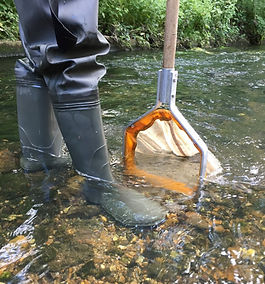
Our ARMI approved Samplers use a standard 3‑minute kick sample + 1‑minute stone search, exactly like professional surveys.
This ensures:
-
Comparable data
-
Reliable detection of changes
-
A consistent method across catchments
So ARMI is not a “lite” version — it’s a targeted application of a professional method.
ARMI focuses on pollution‑sensitive taxa
The eight ARMI groups were chosen because they respond quickly to:
-
Organic pollution
-
Chemical spills
-
Sewage discharges
-
Sediment pulses
If these groups suddenly decline, it’s a strong signal that something has gone wrong.
This is why ARMI is so effective at early detection.


Ian Hawkins, 2nd right, is holding one of his many training sessions.
PFA President, Chris Smiles, 2nd left, is also the Co-ordinator for the PFA team of 18 Samplers and helpers.
After Ian's training sessions our volunteer samplers take samples and analyse the 8 sesitive species whose numbers reflect on the health of our waters.
Different species have different tolerances to pollutants:
-
Sensitive species (e.g., mayflies, stoneflies) disappear quickly when water quality declines.
-
Tolerant species (e.g., worms, midges) thrive in degraded conditions.
-
Because of this, the number and type of taxa present is a direct measure of ecological condition
The following 8 species that our Samplers are monitoring and recording to gain an indication of the health of the sampling site.
Invertebrates are excellent indicators of pollution


Cased Caddis

Mayfly (Ephemeridae)

Flat-Bodied Stone Clinger (Heptageniidae)
Caseless Caddis

Blue-Winged Olive
(Ephemerellidae)

Olives (Baetidae)

Stoneflies (Plecoptera)
